
CONTENTS
- The different components of technical intelligence monitoring
- The intelligence-monitoring process in 6 steps
- Why is scientific and technical intelligence monitoring so important?
- The tools of scientific and technical intelligence monitoring
- The challenges of scientific and technical intelligence monitoring, and a look to the future
Mastering scientific and technical intelligence-monitoring methods lets them detect and identify new trends, players, technologies or methodologies that could influence their business.
This type of monitoring can help spot R&D opportunities or competitive threats. It can help understand and anticipate how regulations will evolve…
There are many strategic reasons that justify the need for serious technical intelligence monitoring.
THE DIFFERENT COMPONENTS OF TECHNICAL INTELLIGENCE MONITORING
Scientific and technical intelligence monitoring revolves around the collection, analysis and dissemination of scientific and technical information from a wide variety of sources. It allows an organization, whether a company, a research laboratory or a government body, to stay at the cutting edge of its field, to detect opportunities and threats early, and to make informed decisions.
There are several types of intelligence monitoring, each focusing on a different aspect of information.
Technology intelligence monitoring
Technology intelligence monitoring focuses on the evolution of technologies, the emergence of new innovations, the lstate of the art in a specific field, and tracking the strategy of key competitors.
For example, an industrial company may track progress in artificial intelligence to anticipate opportunities for developing new products. Monitoring filed patents is an essential part of technology intelligence monitoring, even for companies that do not file patents.
However, it would be a mistake to think that patents alone are enough to feed effective technology intelligence monitoring. First of all, not everything is patentable. Secondly, some companies, sometimes for very good reasons, choose not to file patents. Lastly, when you read a competitor’s published patent, you are, on average, 2 to 3 years behind on their research activities…
Fortunately, limiting yourself to patent monitoring alone is a mistake companies make less and less often.
➡️ Also read: Technology intelligence monitoring: definition and practical guide
Scientific intelligence monitoring
Scientific intelligence monitoring focuses on advances in fundamental and applied research. It looks for signals and indicators about the production of new knowledge within academic and scientific research that could be of industrial interest in the future.
This type of monitoring also helps detect and, where appropriate, select relevant academic partners to collaborate on complex problems.
Scientific intelligence monitoring involves regularly taking part in conferences and symposia, but also reading, day to day, publications of interest in specialized journals, tracking collaborative projects set up at national or international level, and following the work of leading laboratories and researchers in the fields to be watched. The more upstream the topics covered by the monitoring, the more the number of themes to track will potentially increase.
➡️ Also read: Weak signals: don’t miss them during intelligence-monitoring work
Competitive intelligence monitoring
Competitive intelligence monitoring helps you stay informed of competitors’ actions and strategies. It can help a company anticipate its competitors’ moves, understand their collaboration networks, learn as much as possible about their research and innovation focus, and develop effective counter-strategies.
This type of monitoring covers product monitoring as much as research projects or the acquisitions of start-ups or SMEs, on which information is easy to find.
➡️ Also read: Strategic intelligence monitoring: spotting opportunities and threats in time
Regulatory intelligence monitoring
Regulatory intelligence monitoring involves tracking the legislative, regulatory or standards-related developments that may affect how your organization operates. Tracking the international groups working on new standards (for example in the telecoms field) provides a very clear forward-looking view of the market and the technical requirements to expect.
THE INTELLIGENCE-MONITORING PROCESS IN 6 STEPS
The scientific and technical intelligence-monitoring process generally follows a fairly standard sequence made up of several key steps. First and foremost, keep in mind that this is an iterative process, which can be punctuated at regular intervals by requests for deep dives or states of the art, mappings, and so on…
1. DEFINING NEEDS:
Identify the objectives of the intelligence monitoring you’re going to set up. What are the strategic questions it’s supposed to answer, and what signals should it provide? At what pace, depending on the question, should updates be made?
2. SOURCE RESEARCH:
Carefully choose the information sources that are most relevant to meet the specific need of each monitoring question. This can include scientific databases, specialized journals, patents, conference papers, company websites, discussion forums, social networks, etc.
3. INFORMATION COLLECTION:
Carefully build search strategies to retrieve all the relevant information (while limiting noise, i.e. irrelevant information) from the sources you’ve identified. This may involve reading articles, listening to conference talks, following discussion threads on social media. It will also, where appropriate, involve validation exchanges with a subject-matter expert. This will almost certainly result in a keyword list far richer than the one you imagined at the outset…
4. INFORMATION ANALYSIS:
Assess the information you’ve gathered. What are the main points to take away? How does this information align with or contrast with what you already know?
5. DISSEMINATION AND USE OF INFORMATION:
Share the results of your monitoring with the relevant stakeholders (this may be within your own organization or with outside partners). This step is often poorly handled within companies.
Intelligence monitoring that fails to properly plan this dissemination/sharing phase remains an often individual activity, limited to a few people. The monitoring then struggles to demonstrate its effectiveness at the organizational level, to create strategic value and, as a result, to justify sufficient resources (human and financial). In organizations that master the whole monitoring process, including this final step, not only are resources mobilized, but the role of the watchers takes on a more rewarding, strategic dimension.
6. EVALUATION:
Finally, evaluate the entire process at regular intervals. Was the information gathered useful? Was the process effective? What could be improved next time? How many requests for in-depth analysis (deep dives) were generated over the half-year, for example?
WHY IS SCIENTIFIC AND TECHNICAL INTELLIGENCE MONITORING SO IMPORTANT?
If you have doubts about the benefits of scientific and technical intelligence monitoring for your company, read this section. You’ll see that, whatever your sector of activity, you would be wrong to neglect this essential activity.
One of the main uses of intelligence monitoring is to feed decision-making. The data gathered through scientific and technical intelligence monitoring is, as such, fundamental for innovative industrial companies. Whether it’s product development, process improvement, R&D investment or identifying new market opportunities, this information is vital to the company’s growth and survival.
- Maintaining competitiveness generally comes next, in descending order of importance. In an increasingly competitive and fast-moving business environment, intelligence monitoring allows a company to stay up to date on the latest advances, innovations and trends, which is crucial for staying competitive.
- Promoting an innovation-oriented mindset internally is another reason to put a monitoring system in place. It exposes employees to a variety of research, discoveries and new ideas, which can spark their creativity and contribute to a mindset favorable to internal innovation, inspire new ideas and foster a culture of innovation.
- Then comes risk prevention. Intelligence monitoring helps identify and mitigate risks by watching competitive developments, changing regulations and emerging technologies or practices, thereby contributing to the company’s resilience and stability.
- All the issues related to intellectual property are also worth considering. Intelligence monitoring makes it possible to track the latest patent filings arising from academic research or from competitors. In particular, it helps protect the company against third-party infringement of its own intellectual property rights, but also to continuously make sure it doesn’t itself become an infringer… unwittingly… which can cost it dearly.
- Let’s not forget resource savings (particularly human resources). By avoiding duplicating work already done or underway, intelligence monitoring allows resources to be managed efficiently, which is essential for the company’s operational effectiveness.
- Finally, overall, one of the stakes of scientific and technical intelligence monitoring is being at the heart of the strategic management of the innovative company.
How do you think L’Oréal, Schneider Electric or Airbus became world leaders in their fields? Do you know the effort and professionalism behind intelligence monitoring at the heart of these companies? The same is true of thousands of lesser-known SMEs, which have also understood that they could not come out ahead in such a fast-changing world without the right information and the right tools.
THE TOOLS OF SCIENTIFIC AND TECHNICAL INTELLIGENCE MONITORING
There are many tools available to help with scientific and technical intelligence monitoring, ranging from academic databases to dedicated monitoring software. Here are a few examples:
- Databases of scientific publications, symposia or conferences.
- Patent databases: Google Patents, Espacenet (European Patent Office), and USPTO (United States Patent and Trademark Office) make it possible to search for patents filed and published in various technology fields.
- Technology and industry press (specialized or general)
- Databases on collaborative projects
- The internet and useful websites (competitors, clusters, groupings, professional associations…)
- And of course, intelligence-monitoring and analysis tools.
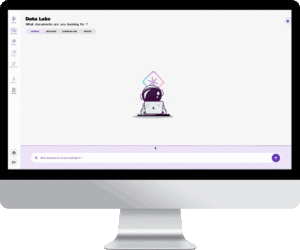
A platform like TKM is a software solution designed to facilitate technology intelligence monitoring and competitive intelligence, in order to track and analyze patents and the scientific literature. It offers advanced analysis features, including technology mapping, patent portfolio analysis, and detection of technology trends.
THE CHALLENGES OF SCIENTIFIC AND TECHNICAL INTELLIGENCE MONITORING, AND A LOOK TO THE FUTURE
Scientific and technical intelligence monitoring allows companies to stay up to date and competitive in an increasingly fast-paced, innovative world. It involves collecting, analyzing and making use of information from a variety of sources to inform strategic decisions, drive innovation, prevent risks, protect intellectual property, save resources and strengthen credibility and reputation.
And tomorrow?
The scientific and technical intelligence-monitoring sector is likely to undergo major changes. The exponential growth of available data, driven in part by the Internet of Things and Big Data, will offer unprecedented opportunities for even more precise and targeted monitoring. Artificial intelligence and machine learning tools will play an increasingly important role in the monitoring process, helping to filter and analyze ever-larger volumes of data, and providing more relevant, real-time insights.
Patents, scientific articles, collaborative projects, theses, web articles… TKM Platform lets you monitor every field you need, without getting lost in the mass of existing information. With our tools, you’ll be able to classify, detect and comment on every piece of information, giving you everything you need to carry out optimal scientific and technical intelligence monitoring.