But writing a State of the Art can be arduous, time-consuming and require considerable resources. The good news is that it is not inevitable and that there are ways to make this exercise less painful and more relevant.
 R&D PERFORMANCE AND STATE OF THE ART: CRUCIAL WORK IN BUSINESS
 R&D PERFORMANCE AND STATE OF THE ART: CRUCIAL WORK IN BUSINESS
Drafting a State of the Art is of strategic importance for companies , in particular for R&D teams. Here are some reasons why this exercise is essential:
- Identification of opportunities and trends: The state of the art makes it possible to identify opportunities for innovation and anticipate future technological trends. This allows companies to adapt their research and development strategy accordingly.
- Avoidance of duplication of efforts: A well-performed state of the art prevents an R&D team from duplicating work already carried out by others, which saves time and resources.
- Competitive positioning: By being aware of the advances made by competitors and understanding the state of research, a company can strengthen its position in the market and develop innovative products or services.
- Collaboration and partnerships: A State of the Art can reveal opportunities for collaboration with other researchers or companies, thus promoting knowledge sharing, the exchange of ideas and the development of strategic partnerships.
WHY IS THE STATE OF THE ART DIFFICULT AND LONG TO PRODUCE?
 WHY IS THE STATE OF THE ART DIFFICULT AND LONG TO PRODUCE?
Writing a State of the Art can be a complex task for several reasons:
- Abundance of information : The overload of information available, from different sources such as scientific articles, patents, technical reports, conferences, blogs, etc. can require a lot of qualification and classification work.
- Constant technological monitoring : Scientific and technological advances are rapid and constant. You must be able to stay up to date, follow the latest discoveries and follow the latest innovations in your field of expertise.
- In-depth analysis : Writing a State of the Art requires a critical analysis of existing work. It is necessary to evaluate the quality, relevance and reliability of the sources to be able to integrate them effectively into the final document.
- Organization and structuring : The state of the art must be clear, well structured and present information in a coherent manner. This requires careful organizational work to avoid redundancies and ensure a fluid and understandable presentation.

HOW TO GAIN IN R&D PERFORMANCE WHEN WRITING A STATE OF THE ART?
 HOW TO GAIN IN R&D PERFORMANCE WHEN WRITING A STATE OF THE ART?
To optimize the writing of a State of the Art, here are some best practices to implement:
- Define a clear methodology: Establish a systematic research method to identify, sort and evaluate relevant sources of information.
- Automate technology monitoring: Use technology monitoring tools to stay up to date on the latest publications, patents and conferences related to the area of expertise.
- Collaborate and share tasks: Involve several members of the R&D team in writing the State of the Art, sharing the workload and exploiting individual expertise.
- Use bibliographic reference management tools: Reference management tools such as Mendeley, Zotero or EndNote allow you to effectively manage information sources, organize them and cite them correctly.
- Review and update regularly: A State of the Art should be reviewed and updated regularly to reflect the latest research advances. It is therefore important to allocate time for this task and to rely on tools to gradually build up an intangible asset capitalizing on monitoring work.

HOW OUR SOFTWARE PLATFORM MAKES WRITING YOUR STATE OF THE ART EASIER
 HOW OUR SOFTWARE PLATFORM MAKES WRITING YOUR STATE OF THE ART EASIER
The TKM Platform makes it easier and faster to write state-of-the-art reports. If your R&D team is overloaded, some of its advanced features can simplify the task beyond all expectations:
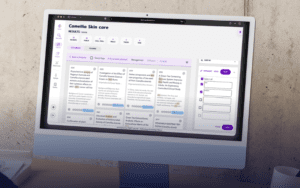
- Automatic information extraction and filtering: “Data Lake” and “Projects” modules are capable of extracting relevant information from different sources and filtering it according to specific criteria defined by the user.
- Similarity and relevance analysis: “Analysis” module uses advanced algorithms to assess the similarity and relevance of documents to the specific research area, enabling the rapid identification of the most relevant works.
- Automatic document structuring and generation: TKM Plaftorm facilitates the structuring of the state of the art by automatically generating a table of contents, integrating bibliographic references and organizing information in a clear and consistent manner.
- Collaboration and sharing: “Watches” module allows team members to collaborate in real time on the writing of the State of the Art, to share annotations and comments, and to track the different versions of the document.

You reverse the usual ratio and now spend only 25% of your time collecting data and 75% analyzing and producing results .
If like us, you are convinced that the State of the Art represents strategic work, not only for your R&D team, but also for your company.
If like us, you think that suffering to perform this exercise should not be inevitable.
Discover TKM Platform and let's discuss your needs!