Mastering scientific and technical monitoring methods will enable them to detect and identify new trends, players, technologies or methodologies that could influence their activity.
This type of monitoring can help identify research and development opportunities or competitive threats. It can help understand and anticipate regulatory changes…
There are many strategic reasons that justify the need for serious technical monitoring.
 THE DIFFERENT COMPONENTS OF TECHNOLOGY MONITORING
 THE DIFFERENT COMPONENTS OF TECHNOLOGY MONITORING
Scientific and technical monitoring revolves around the collection, analysis, and dissemination of scientific and technical information from a wide variety of sources. It enables an organization, whether a company, a research laboratory, or a government agency, to stay at the forefront of developments in its field, to detect opportunities and threats early on , and to make informed decisions.
There are several types of monitoring, each focusing on a different aspect of information.
Technology watch
Technology monitoring focuses on the evolution of technologies , the emergence of new innovations, the state of the art in a specific field, and monitoring the strategy of the main competitors.
For example, an industrial company can track advances in artificial intelligence to anticipate opportunities for developing new products. Monitoring patent applications is an essential part of technology intelligence, even for companies that do not file patents.
However, it would be a mistake to assume that patents alone are sufficient to fuel effective technology monitoring . First, not everything is patentable. Second, some companies, sometimes for very good reasons, choose not to file patents. Finally, when you read a competitor's published patent, you are on average two to three years behind their research activities.
Limiting oneself to patent monitoring alone is a mistake that is fortunately being made less and less often by companies.
See also: Technology monitoring: definition and practical guide
Scientific monitoring
Scientific monitoring focuses on advances in fundamental and applied research . It seeks signals and indicators of new knowledge production within academic and scientific research that could have industrial applications in the future.
This monitoring also makes it possible to detect and, where appropriate, select relevant academic partners to collaborate on complex challenges.
Scientific monitoring involves regularly attending conferences and symposia, but also, on a daily basis, reading relevant publications in specialized journals, monitoring collaborative projects being developed at the national or international level, and following the work of leading laboratories and researchers in the relevant fields. The more this monitoring focuses on upstream topics, the greater the potential number of themes to monitor.
Read also: Weak signals: don't miss them during monitoring work
Competitive intelligence
Competitive intelligence allows you to stay informed about the actions and strategies of your competitors . It can help a company anticipate its competitors' moves, understand their collaboration networks, learn as much as possible about their research and innovation priorities, and develop effective response strategies.
This monitoring will focus as much on product monitoring as on research projects or acquisitions of start-ups or SMEs on which information is easy to find.
Read also: Strategic intelligence: detecting opportunities and threats in a timely manner
Regulatory monitoring
Regulatory monitoring involves tracking legislative, regulatory , or standards developments that may affect your organization's operations. Following international groups working on new standards (such as in the telecommunications sector) provides a very clear, forward-looking view of the market and technical requirements.

THE 6-STEP MONITORING PROCESS
 THE 6-STEP MONITORING PROCESS
The scientific and technical monitoring process generally follows a fairly classic process composed of several key steps. Above all, remember that it is an iterative process, which may be punctuated at regular intervals by requests for in-depth investigations (deep dives) or state-of-the-art reviews , mapping, etc.
1. Defining needs: Identify the objectives of the monitoring system you will implement. What strategic questions is it supposed to answer and signals? How frequently should updates be made, depending on the question?
2. Source research: Carefully select the information sources that are most relevant to the specific needs of each monitoring question. This may include scientific databases , specialized journals, patents, conference papers, company websites, discussion forums, social networks, etc.
3. Information Gathering: Carefully develop your research strategies to retrieve all relevant information (while minimizing noise, i.e., irrelevant information) from your identified sources. This may involve reading articles, listening to conferences, and following social media discussions. It will also potentially involve validating your findings with a subject matter expert. This will undoubtedly result in a much larger keyword list than initially anticipated.
4. Information Analysis: Evaluate the information you have gathered. What are the main points to remember? How does this information align with or contrast with what you already know?
5. Dissemination and use of information: Share the results of your monitoring with relevant stakeholders (this can be within your organization or with external partners). This step is often poorly managed in companies.
Due to a lack of careful planning regarding the dissemination and sharing phase of competitive intelligence, it often remains an individual activity, the preserve of a select few. Consequently, competitive intelligence struggles to demonstrate its effectiveness at the organizational level, to create strategic value, and therefore to attract sufficient human and financial resources. In organizations that master the entire competitive intelligence process, including this final stage, not only are resources mobilized, but the role of intelligence analysts also takes on a valuable strategic dimension.
6. Evaluation: Finally, evaluate the entire process at regular intervals. Was the information gathered useful? Was the process efficient? What could be improved for next time? How many requests for in-depth analysis (deep dive) were generated during the semester, for example?

WHY IS SCIENTIFIC AND TECHNICAL MONITORING SO IMPORTANT?
 WHY IS SCIENTIFIC AND TECHNICAL MONITORING SO IMPORTANT?
If you doubt the benefits of scientific and technological monitoring for your company, read this section. You will see that, whatever your sector of activity, you would be wrong to neglect this essential activity.
One of the main applications of competitive intelligence is to inform decision-making . The data gathered through scientific and technical intelligence is therefore fundamental for innovative industrial companies. Whether it involves product development, process improvement, R&D investment, or identifying new market opportunities, this information is vital for the company's growth and survival.
- Maintaining competitiveness generally comes next, in descending order of importance. In an increasingly competitive and fast-paced business environment, monitoring allows a company to stay up-to-date on the latest developments, innovations, and trends, which is crucial for remaining competitive.
- Promoting an innovation-oriented mindset internally also justifies the implementation of a monitoring system. It exposes employees to a variety of research, discoveries, and new ideas, which can stimulate their creativity and contribute to a mindset conducive to internal innovation, inspire new ideas, and foster a culture of innovation.
- Then comes risk prevention . Monitoring helps to identify and mitigate risks by tracking competitive developments, changing regulations and new technologies or emerging practices, thus contributing to the resilience and stability of the company.
- All the issues associated with intellectual property must also be considered. Monitoring allows companies to track the latest patent applications from academic research or competitors. This monitoring helps protect the company against third-party infringements of its own intellectual property rights, and also ensures that it does not inadvertently become an infringer itself—which can be very costly.
- Let's not forget the economy of resources (especially human resources). By avoiding duplication of work already completed or in progress, monitoring allows for efficient resource management, which is essential for the operational efficiency of the company.
- Finally, one of the key challenges of scientific and technological intelligence is to be at the heart of the strategic management of innovative companies .
How do you think L'Oréal , Schneider Electric, or Airbus became world leaders in their fields? Are you aware of the efforts and professionalization of intelligence gathering within these companies? This is also the case in thousands of lesser-known SMEs, which have also understood that they cannot succeed in such a rapidly changing world without the right information and tools.
TOOLS FOR SCIENTIFIC AND TECHNICAL MONITORING
 TOOLS FOR SCIENTIFIC AND TECHNICAL MONITORING
Numerous tools are available to facilitate scientific and technical monitoring, ranging from academic databases to specialized monitoring software. Here are a few examples:
- Databases of scientific publications , symposia or conferences.
- Patent databases : Google Patents, Espacenet (European Patent Office), and USPTO (United States Patent and Trademark Office) allow you to search for patents filed and published in various technological fields.
- The technological and industrial press (specialized or general interest)
- Databases on collaborative projects
- The internet and useful websites (competitors, clusters, professional associations, etc.)
- And of course, monitoring and analysis tools .
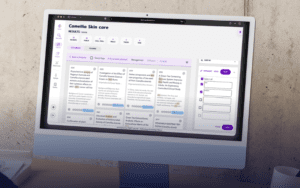
A platform like TKM is a software solution designed to facilitate technology and business intelligence monitoring, enabling the tracking and analysis of patents and scientific literature. It offers advanced analytical features, including technology mapping, patent portfolio analysis, and technology trend detection.
THE CHALLENGES OF SCIENTIFIC AND TECHNOLOGICAL MONITORING AND LOOKING TOWARDS THE FUTURE
 THE CHALLENGES OF SCIENTIFIC AND TECHNOLOGICAL MONITORING AND LOOKING TOWARDS THE FUTURE
Scientific and technological monitoring enables companies to stay up-to-date and competitive in an increasingly fast-paced and innovative world. It involves collecting, analyzing, and leveraging information from diverse sources to inform strategic decisions, stimulate innovation, mitigate risks, protect intellectual property, conserve resources, and enhance credibility and reputation.
And what about tomorrow?
The scientific and technical intelligence sector is likely to undergo major changes. The exponential growth of available data, partly thanks to the Internet of Things and Big Data , will offer unprecedented opportunities for even more precise and targeted intelligence gathering. Artificial intelligence and machine learning will play an increasingly important role in the intelligence process, helping to filter and analyze ever-increasing volumes of data and providing more relevant, real-time insights.
Patents, scientific articles, collaborative projects, theses, web articles… TKM Platform allows you to monitor all the areas you want , without getting lost in the sheer volume of information. Thanks to our tools, you will be able to classify, detect, and comment on each piece of information, giving you all the means to conduct optimal scientific and technical monitoring.
Would you like to know more?